- Email atoglobalschool@gmail.com
- Phone +91 99999 22222
An education at Alpha to Omega is designed to foster the following developmental milestones in a child’s life, ensuring that an Alpha to Omega student achieves:
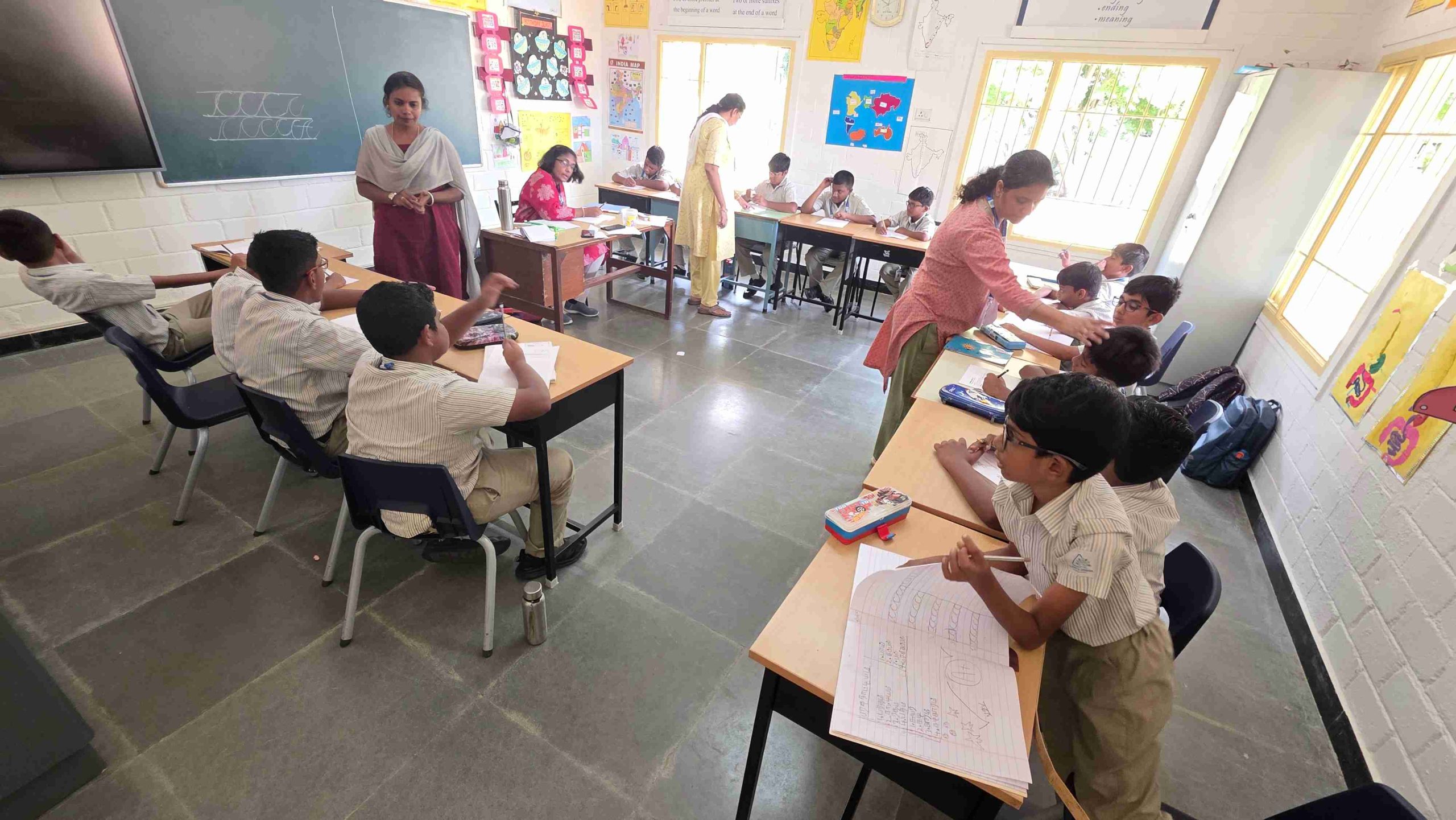
Our programme is based on specialised learning techniques that help children strengthen their ability to learn. By focusing on fundamental and transferable cognitive skills, we look to improve different areas of a child’s development. For instance, strengthening a child’s auditory processing will not only help them read and spell better, but also help them express themselves clearer and more confidently. Group sessions develop academic thought and foster crucial interpersonal skills, whilst teaching children the importance of inclusion and working consciously in a community.
Our curriculum uses research-based, field-tested techniques and instructional procedures to change the way children with learning challenges think and work. We equip them with core cognitive and fundamental skills, which give them the opportunity to succeed in school and beyond. Constantly challenging them builds their confidence, independence and attitude necessary for wanting to excel and learn beyond.
As one of Chennai’s distinguished Cambridge curriculum schools, the benchmark here is not uniformity, it is possibility. Every learner enters with an untapped capacity for intellectual growth; the role of an inclusive Cambridge education is to illuminate that potential and set it in motion. Through a rigorous Cambridge syllabus, students are challenged to think independently, reflect critically, and take genuine ownership of their learning journey. Nurtured to become active, self-directed learners, they are guided not towards a ceiling, but towards a horizon — one that stretches with them throughout their lives.
We firmly believe in the power of the community. For a child to successfully progress, it is important that our educational specialists work alongside parents, caretakers, and other educational institutions. Our programme requires a hands-on commitment from all of us.
A foremost priority for parents is grade level competence; however, at-risk students are often only expected to “get by”. We forgo regurgitated conventional teaching methods for intensive, specialized, research-proven exercises for students to successfully and independently learn.
Not only do they gain a foothold in school, their psychological results, scores, and self-esteem also improve, and children begin setting meaningful and aspirational goals for themselves.
Each child deserves a programme that fits their needs. Our admissions assessment first identifies each student’s strengths, weaknesses, and interests so we can customise the best possible approach to furthering each child’s capabilities. Trained educational specialists formulate comprehensive lesson plans that will stimulate, challenge, and improve our students’ abilities in a safe environment.
Children attend regular and intensive individual and group classes. This allows our teachers to closely follow each child’s progress in one-on-one sessions and continually refine their learning programme, while encouraging children to problem solve with their peers during group sessions.
Grounded in the principles of individualised attention and personalised learning, ATO Global School’s 10:1 student-teacher ratio ensures every learner receives the focused, student-centric classroom experience they deserve. Within this Cambridge International School in Chennai, no child’s potential goes unnoticed or unnurtured.
Eight fully equipped digital classrooms transform instruction into an immersive, interactive learning environment – where concept-driven Cambridge syllabus content comes alive through technology. This modern school infrastructure ensures every session is as engaging as it is academically purposeful, preparing learners for a rapidly evolving world.
Beyond the classroom, six purposefully curated outdoor activities foster holistic development, physical wellbeing, and meaningful social learning. Each programme nurtures sensory-motor skills and emotional resilience – dimensions of growth that are as vital to a Cambridge-aligned education as academic rigour.
At ATO Global School, educators are not merely instructors — they are trained educational specialists who bridge the Cambridge curriculum with the distinct learning profile of every child.
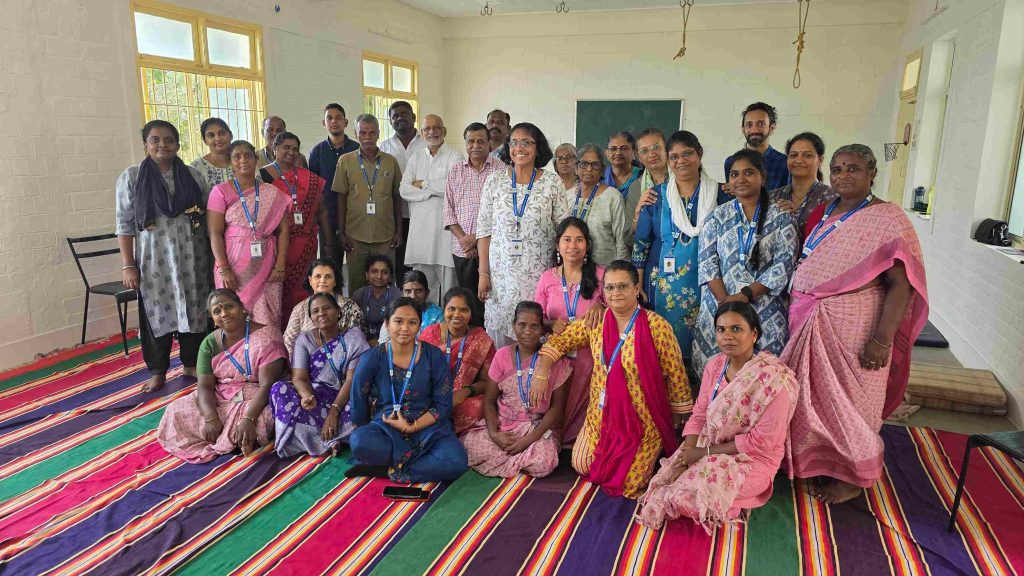
Inclusive excellence at ATO Global School is not a philosophy alone — it is a lived, multi-dimensional practice. Every programme is designed to engage the whole child across cognitive, sensory, academic, and creative dimensions.
Anchored in Cambridge International Education and complemented by NIOS (National Institute of Open Schooling), the academic framework here bridges global standards with accessible, inclusive pathways for every learner.
Structured cognitive development is facilitated through internationally recognised methodologies including Feuerstein Instrumental Enrichment (FIE) and NILD Therapy — cultivating reasoning, self-regulation, and mediated learning.
A rich tapestry of multi-sensory learning modalities, encompassing Rx Math, Drama, and Yoga – develops spatial awareness, expressive confidence, and the sensory integration that underpins lasting academic engagement.
Establishing barrier-free environments in schools to support accessibility.
Preparing educators to adopt pedagogical methods tailored to diverse learning needs.
Creating flexible and inclusive teaching-learning resources.
Implementing comprehensive evaluation systems to account for varied learner profiles.
The Cambridge curriculum and CBSE serve distinct educational philosophies. Where CBSE is aligned to the Indian national framework, the Cambridge International Education pathway — recognised by over 10,000 schools across 160 countries – cultivates inquiry-based learning, critical thinking, and conceptual understanding from an early age. For parents who envision their child as a globally minded citizen, confident in independent thought and capable of thriving in international academic environments, the Cambridge framework offers a transformative depth that extends well beyond rote learning.
ATO Global School occupies a singular position among Cambridge curriculum schools in Chennai: it is both a registered Cambridge International School and an inclusive learning institution. Unlike conventional international schools, the school brings together a specialist team of educational practitioners, therapists, and support professionals who operate within an integrated "village" model – ensuring that every child, regardless of their learning profile, is equipped to access the full rigour of the Cambridge syllabus. Personalised learning, a 10:1 student-teacher ratio, and evidence-based cognitive interventions make this an institution defined by depth, not convention.
Comparing the Cambridge and ICSE boards on the basis of ease is a misconception worth addressing. Both are considered academically rigorous, yet they differ significantly in approach. The Cambridge syllabus emphasises conceptual understanding, independent enquiry, and the application of knowledge skills that are evaluated through open-ended assessment rather than memory-based examination. ICSE places considerable weight on comprehensive content coverage. For learners who are encouraged to think, question, and reason rather than simply recall the Cambridge framework is not easier; it is differently demanding, and profoundly rewarding.
A Cambridge International School in Chennai offers parents access to a globally benchmarked education that transcends regional boundaries. Key benefits include an internationally recognised qualification accepted by leading universities worldwide, a concept-driven curriculum that prioritises depth over breadth, pedagogy designed to develop reflective thinkers and confident communicators, and a learning environment that nurtures future-ready learners prepared for the demands of a complex, interconnected world. The Cambridge pathway shapes not just academic capability, but character.
Each board represents a distinct philosophy of education. CBSE is India's national curriculum, standardised and broadly accessible. ICSE is content-rich and places emphasis on English and the humanities. The International Baccalaureate (IB) adopts a highly reflective, transdisciplinary approach, encouraging learners to draw connections across subjects and cultures. Cambridge International Education – delivered through programmes from Primary to Advanced Level is concept-driven, globally portable, and assessed through critical thinking rather than rote recall. For parents seeking a Cambridge syllabus school that balances academic excellence with holistic, inclusive pedagogy, ATO Global School offers an environment where all four pillars rigour, relevance, reflection, and relationships converge.