Why Circle Time in Schools Is Important for Emotional Wellbeing and Child Development
– By Mrs. Lalitha Ramanujan
Talking or expressing what you feel is a good way to accept our emotions and gain strength to know we have unlimited pathways to grow. Student life is as challenging as that of a life of an adult. An adult often think children are carefree and have no worries. Is it true?
Giving children the opportunity to share their own feelings and how they see others is an important aspect of growing up. Often, we look at the physical health and give little thought to emotional strength. Emotional wellbeing in schools plays a key role in shaping confident and resilient individuals.
Learning to talk or acquiring a language comes naturally to any non-challenged individual. However, learn to read is different, this needs systematic intervention from an adult or facilitator. I think assuming a child should learn emotional strength or ability to be understanding and accepting oneself and others will come naturally as he or she grows.
We as adults could be better facilitators if we begin to gain an insight into what feelings the child undergoes. As adults we may tend to forget to put ourselves into the shoes of the child. Social-emotional learning requires conscious guidance, patience, and structured opportunities for expression.
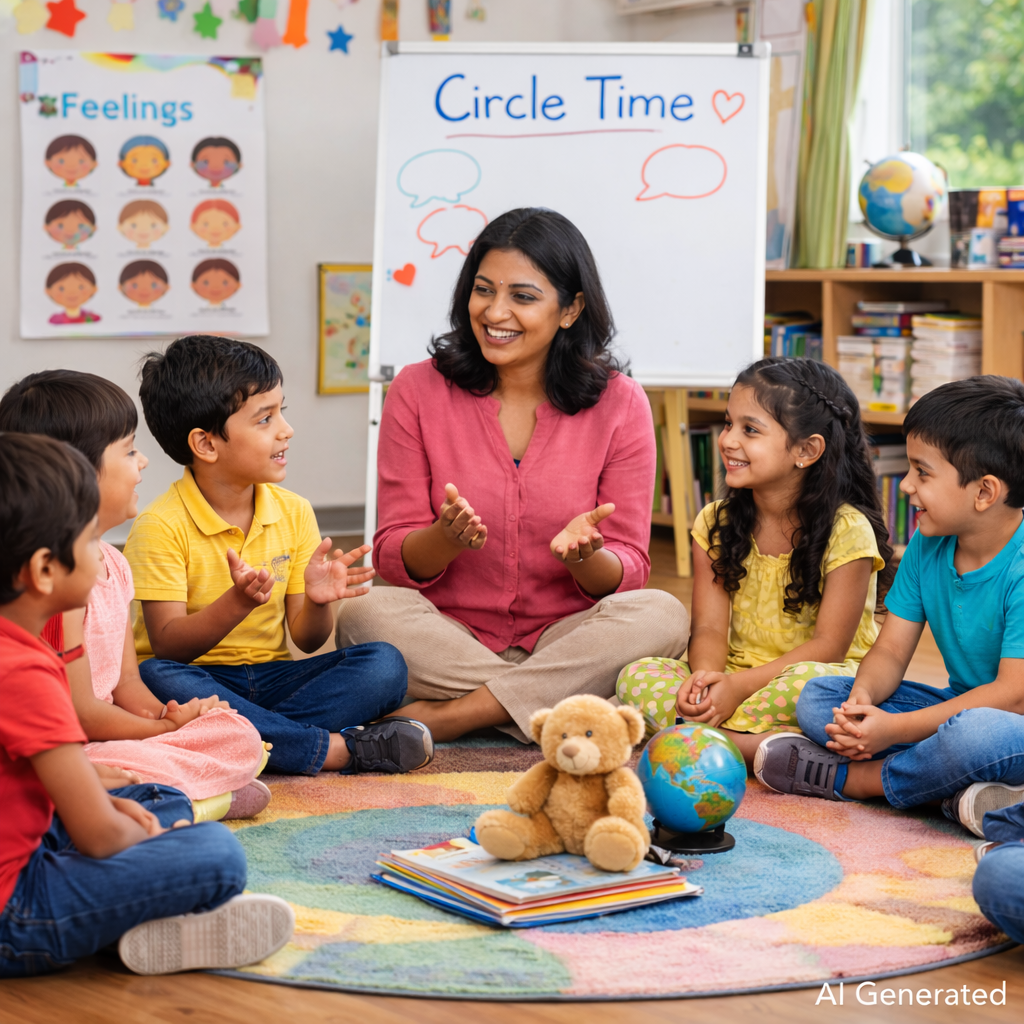
School can play a significant role in promoting the wellbeing, by facilitating the child to be aware of his emotional pathways. A circle time conducted under the guidance of a trained person, practice to share, discuss, build relationships and enhance their social and emotional skills. This could prevent inappropriate behaviors. Personally, I think prevention is better than trying to cure an inappropriate behavior.
Children are born honest. Inappropriateness I think is an acquired quality, which the child picks up from the environment. Open discussion, listening to stories, or listening to one another’s view in Circle time should be steppingstones to accept relationships in a smoother way. A positive school environment strengthens emotional intelligence and mutual respect.
Peers do have immense influence irrespective of the age of the child.
Circle time at home, involving adults in the family and children is another fact to be considered. Quality time is not homework time. It is time we spend to be open and understand each other and meet our emotional needs.
At Alpha to Omega Global School, we believe that emotional wellbeing is as important as academic excellence. Structured Circle Time sessions support our commitment to holistic education, nurturing socially responsible, confident, and emotionally strong learners.